


Recycled plastic spacers for segment stacking
For the storage of prefabricated concrete segments

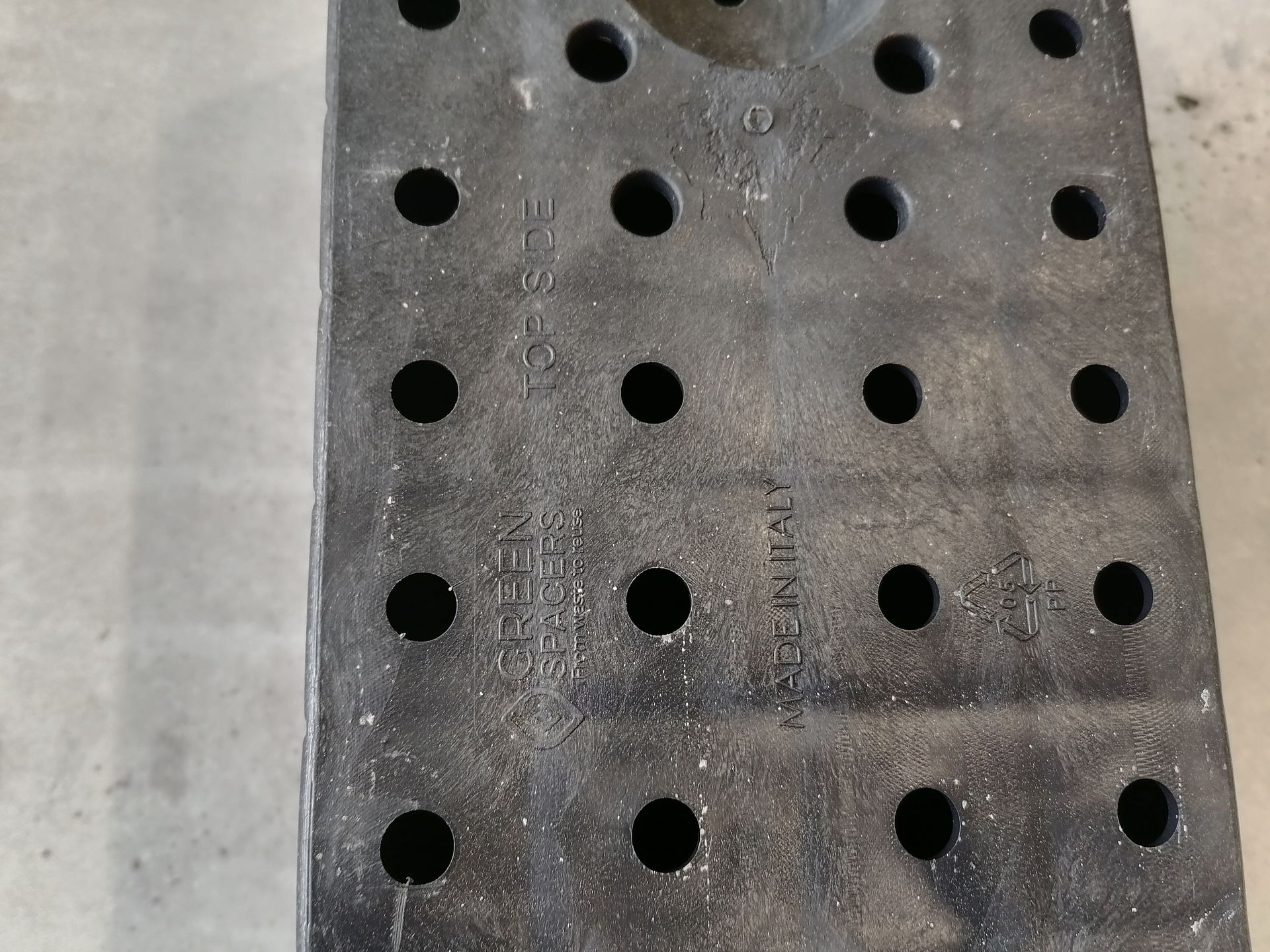
GREEN SPACERS
From waste to reuse
A recycled plastic alternative to timber spacers
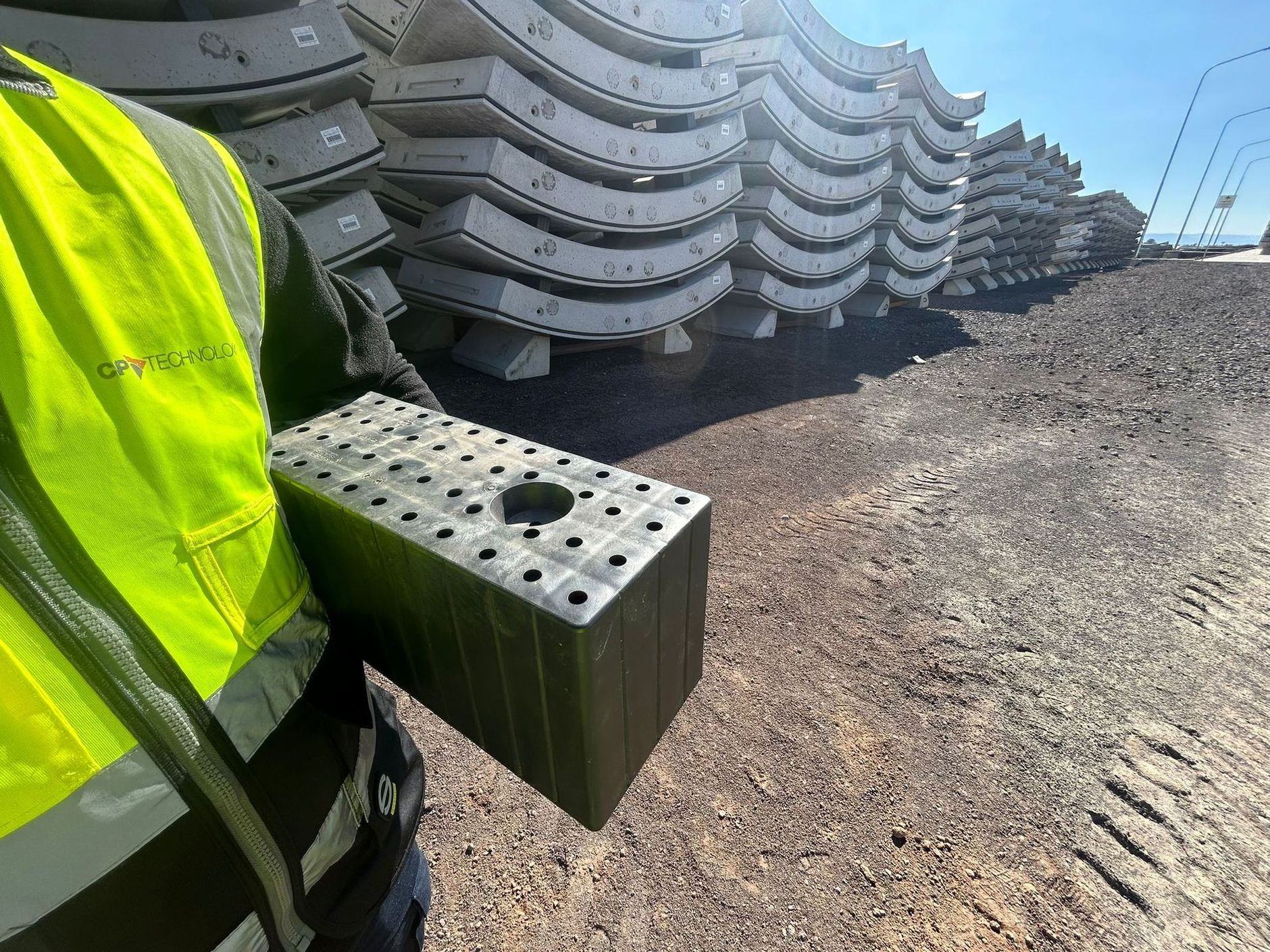
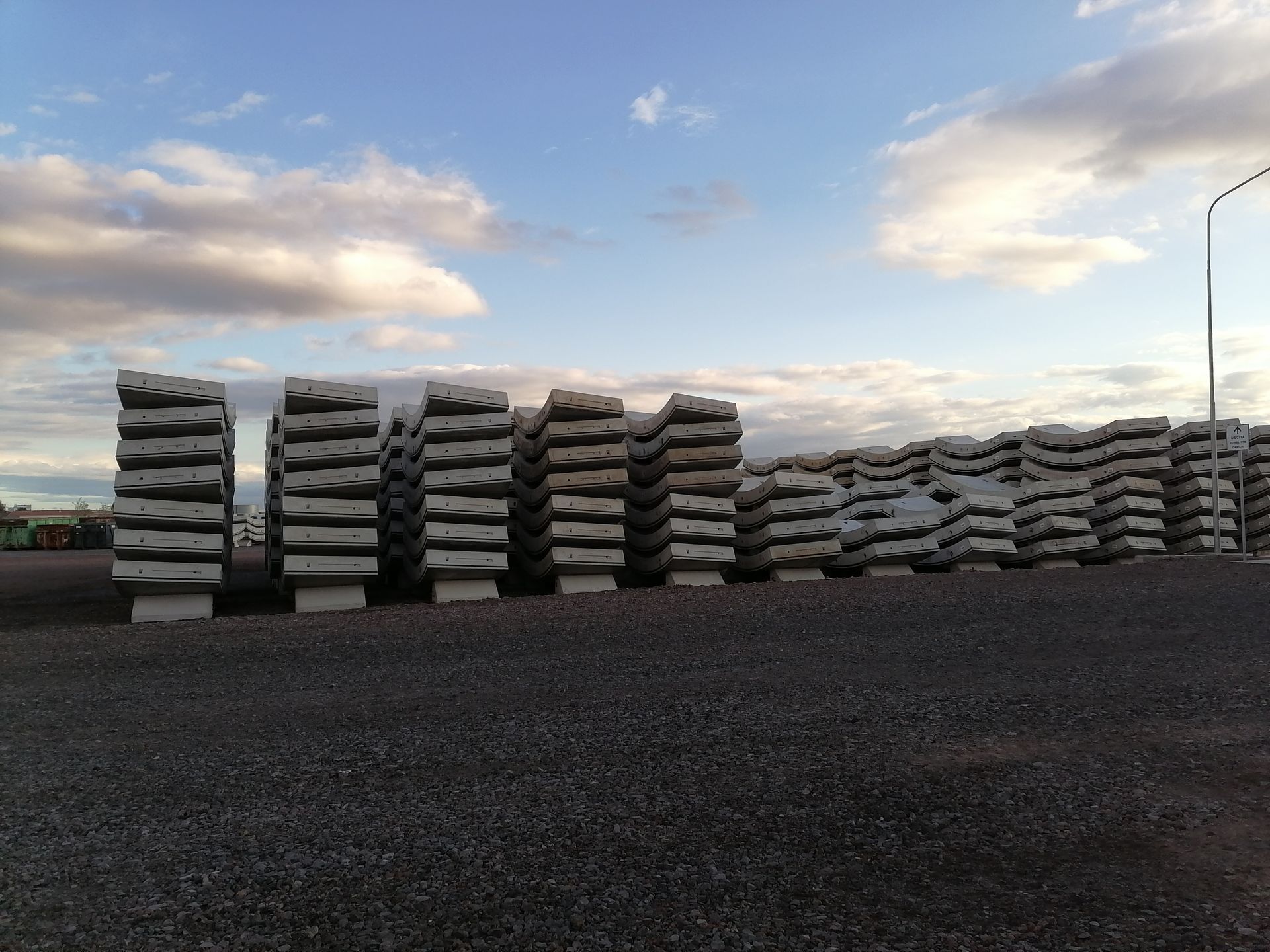
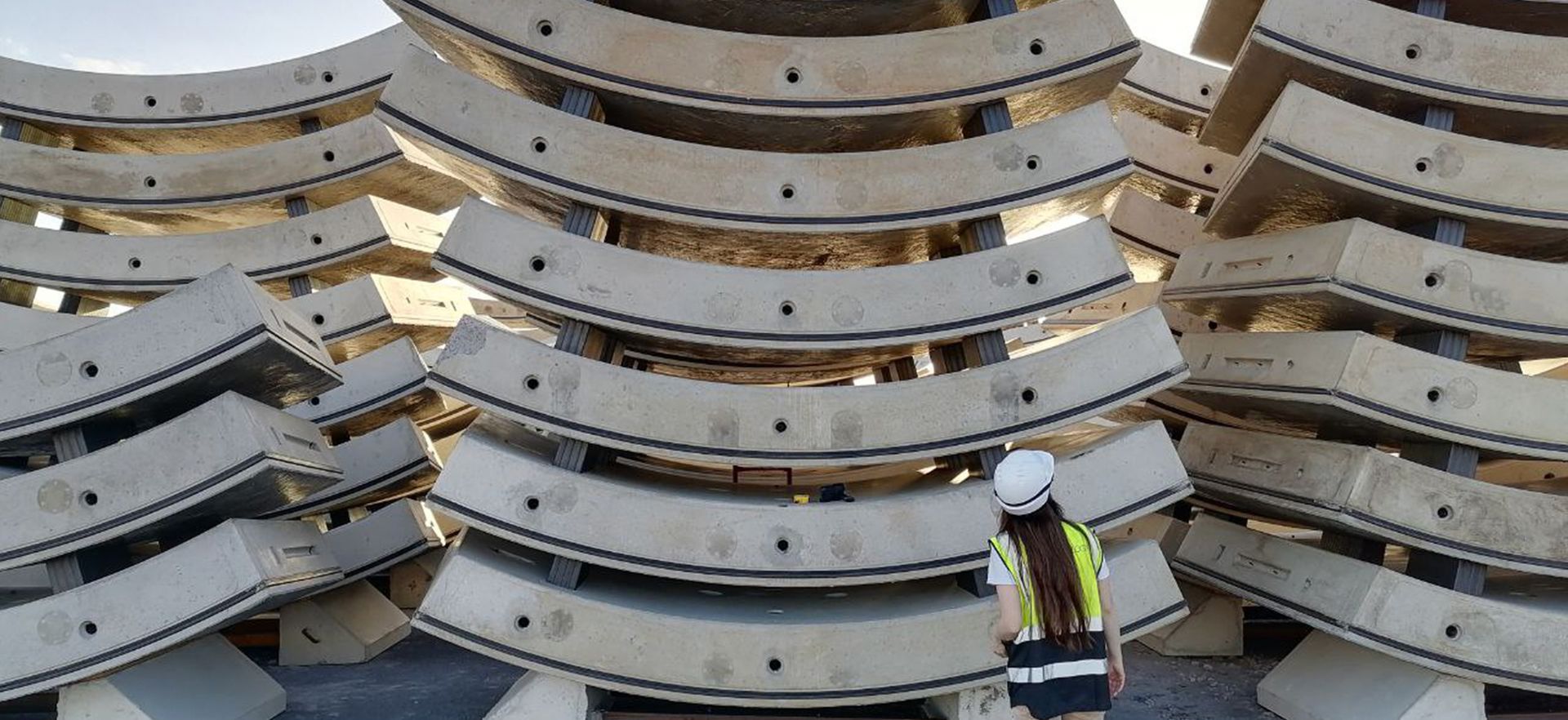
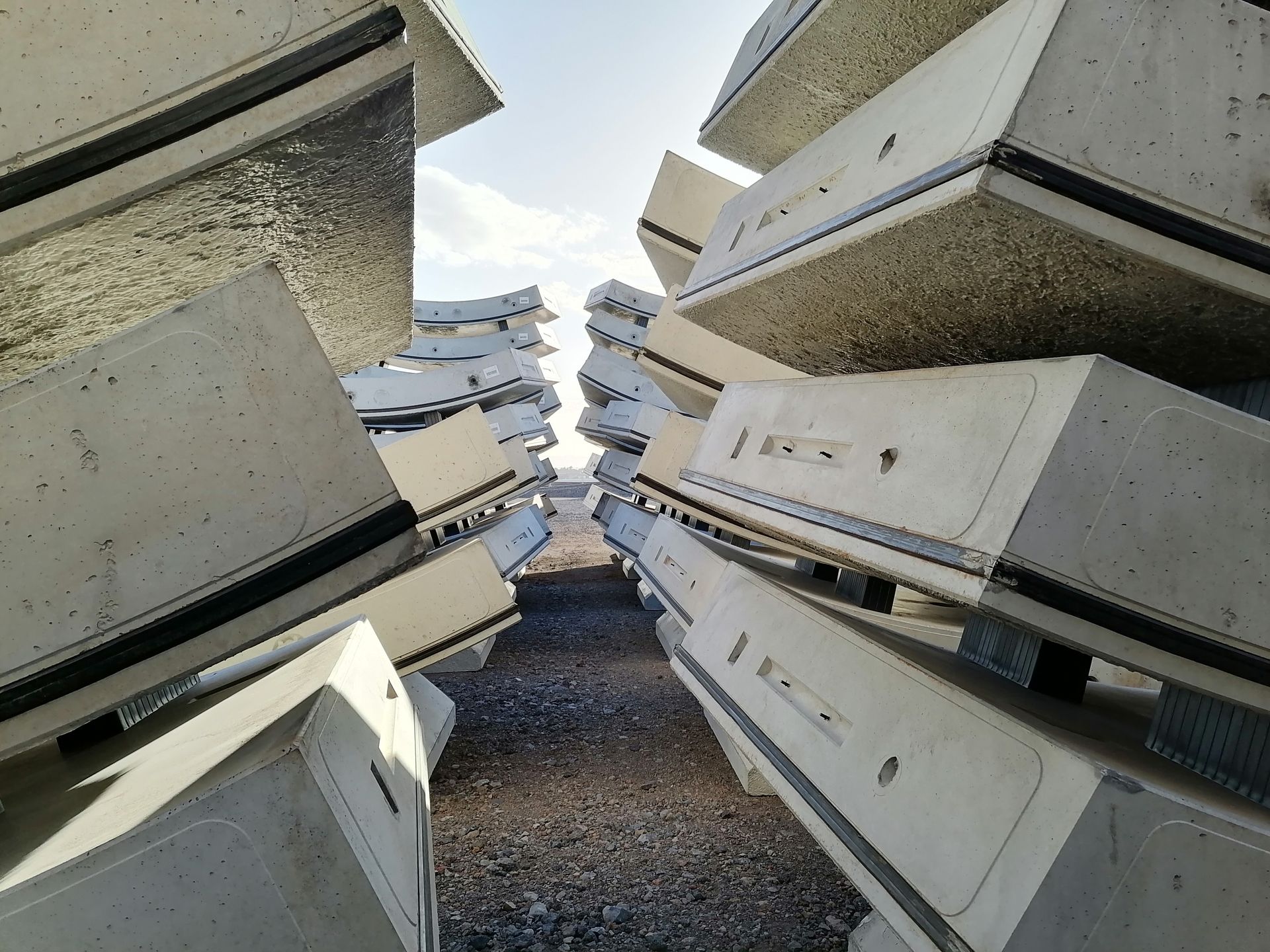
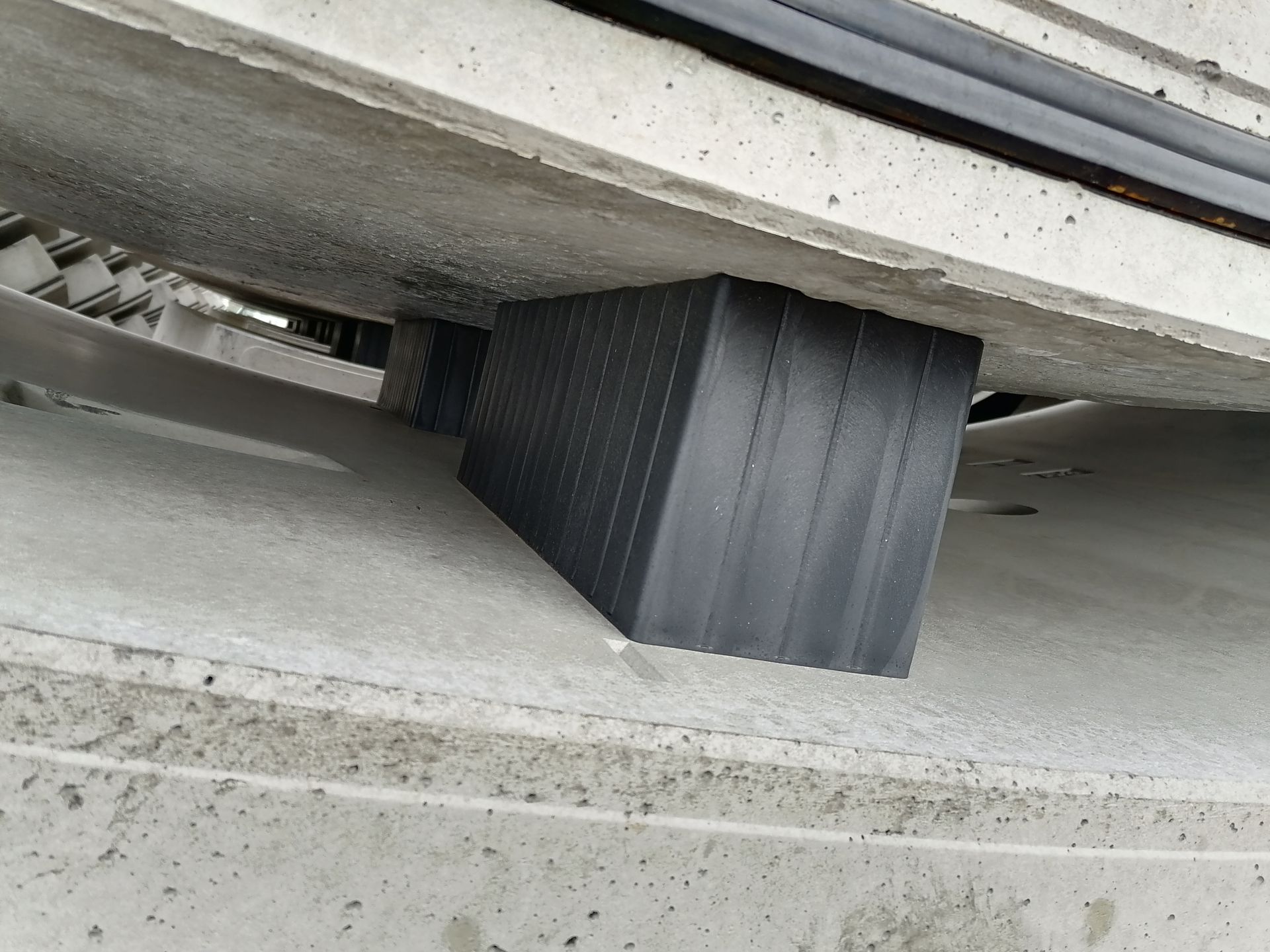
Green Spacers replace traditional timber spacers and wooden dunnage used to stack precast concrete tunnel segments. Manufactured from 100% recycled plastic, they separate successive layers of segments at the planned bearing points in precast factory storage yards and TBM site storage areas.
Designed for segment storage
Used as concrete segment dunnage or tunnel segment stacking blocks, these supports form part of the storage system. Their dimensions, bearing areas and spacing must suit the segment geometry, storage layout and handling procedure.
Consistent positioning
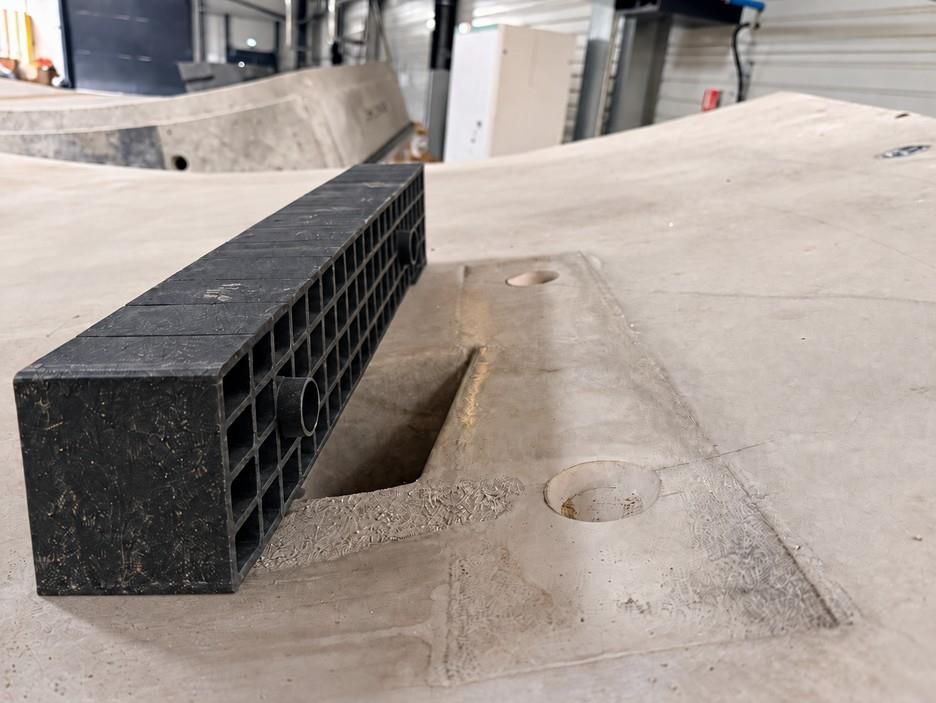
Our spacers combine a load-bearing body with locating pins that engage matching sockets cast into the concrete. This helps operators position each spacer consistently and restrain lateral sliding during approved segment movements. Standard sizes and project-specific designs allow the spacer arrangement to be assessed for the application.
From waste to reuse
Green Impact develops recycled plastic products for circular economy applications. Replacing timber supports with reusable plastic spacers gives recycled material a practical role in infrastructure prefabrication and reduces the need for new wooden spacers.

Benefits
Improved Safety
- Resistant to attacks by mold and fungi
- Reduced injury risk for workers
- Compliance with robot handling
Project References
ITALY & AUSTRALIA
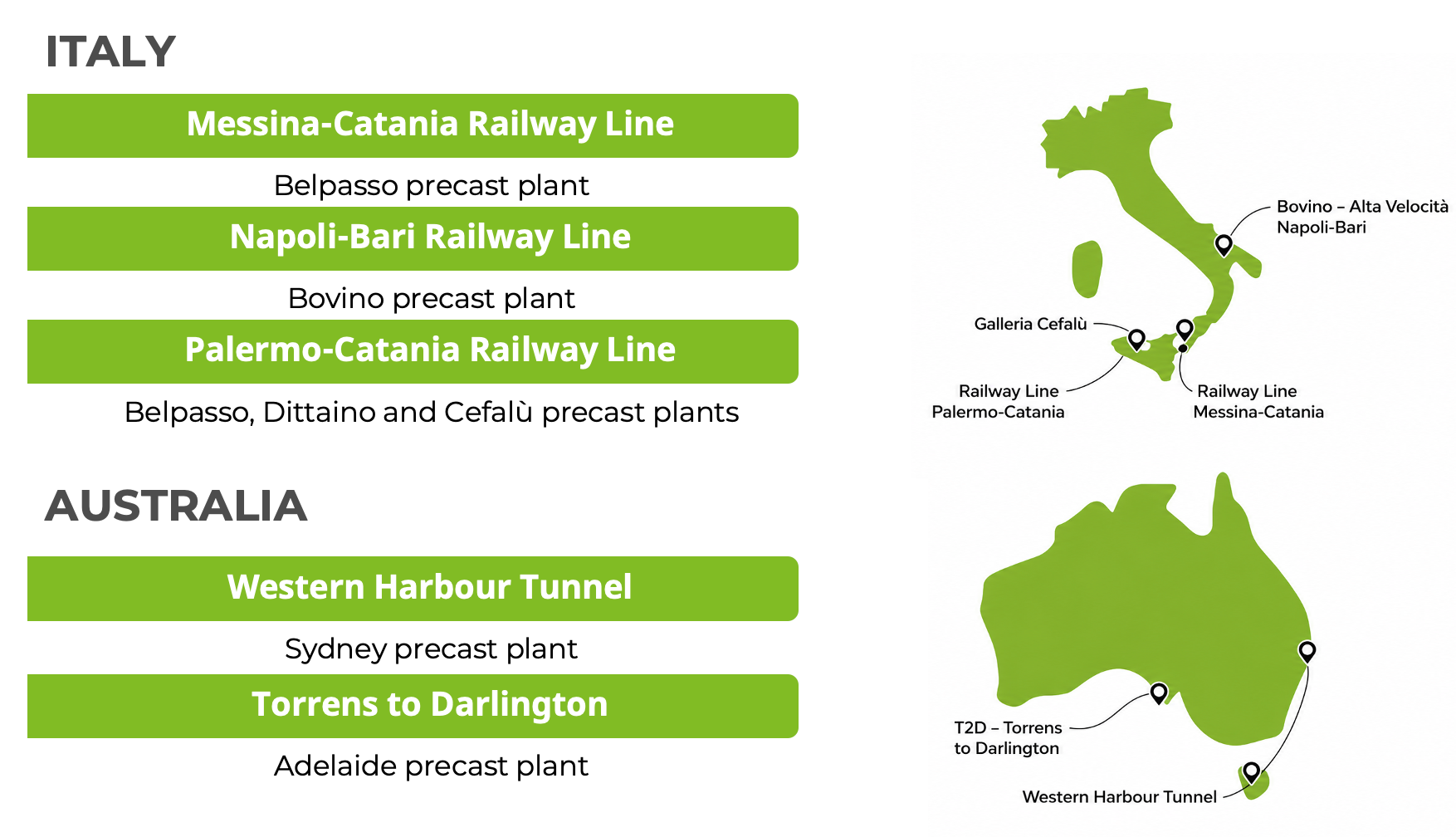
Recycled plastic spacers for major tunnelling and railway projects, with over 500,000 units supplied in three years.
- 01 · Messina–Catania Railway Line
Belpasso precast plant · Italy
- 02 · Napoli–Bari Railway Line
Bovino precast plant · Italy
- 03 · Palermo–Catania Railway Line
Belpasso, Dittaino and Cefalù precast plants · Italy
- 04 · Western Harbour Tunnel
Sydney precast plant · Australia
- 05 · Torrens to Darlington (T2D)
Adelaide precast plant · Australia
Our project references represent approximately 1.7 million kg of recycled plastic used in Green Spacers.
Select the map to view it at full size.
Technical Data
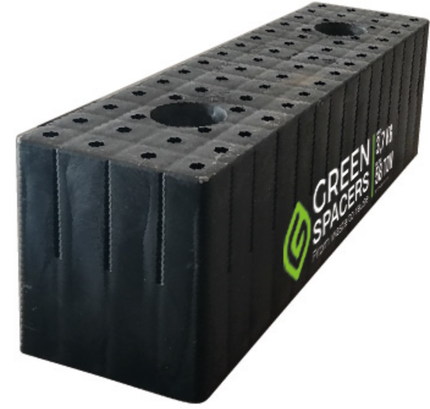
Material: 100% recycled plastic
Weight: < 4kg
Dimensions:
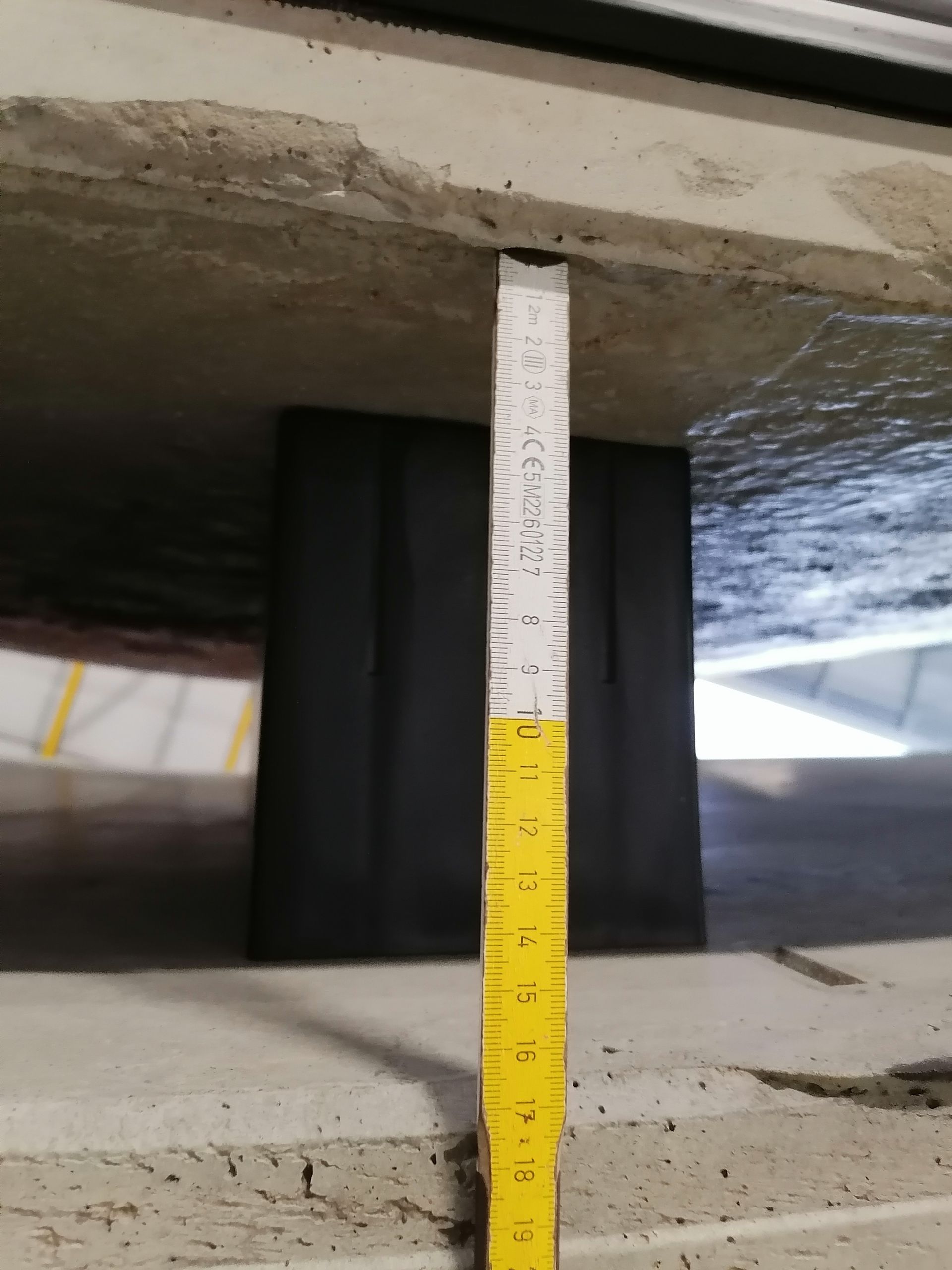
150X H170 X 500 mm
150X H150 X 600 mm
Maximum Working Load:
- 30 tons - size 150X H170 X 500 mm
- 40 tons - size 150X H150 X 600 mm
We also offer project-specific customization, including:
- Varying heights and lengths
- Engraved logos or identification markings
- Tunnel Blocks fibre-reinforced materials
Why are Green Spacers
Eco-friendly?
- Recycled Plastic: use of post-consumer plastic, eliminating the need to produce new plastic
- Second Life of Plastic: Green spacers are produced using plastic that would otherwise be sent to landfill;
- Avoid deforestation:
Green Spacers replace the timber spacers previously used

POSITIONING PINS
Accurate, repeatable positioning at the designed bearing points
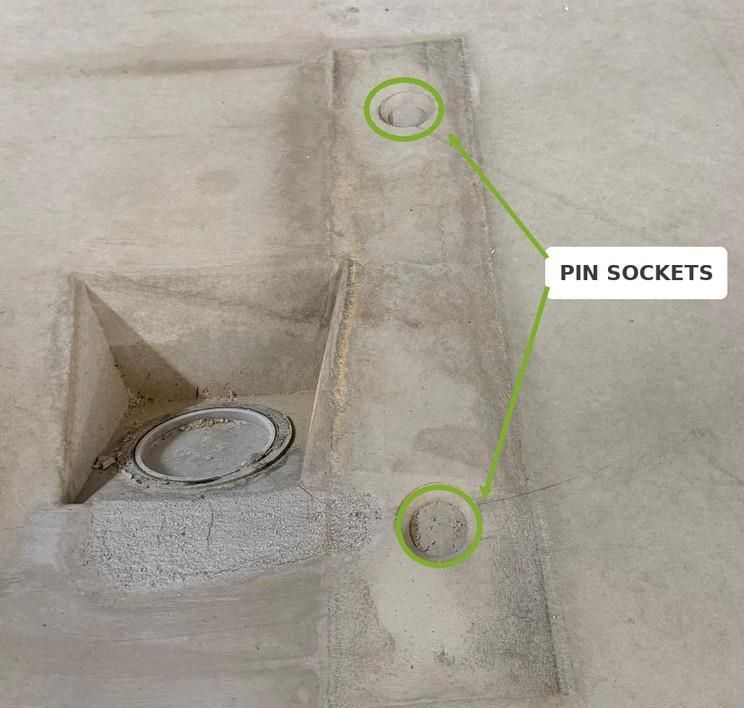
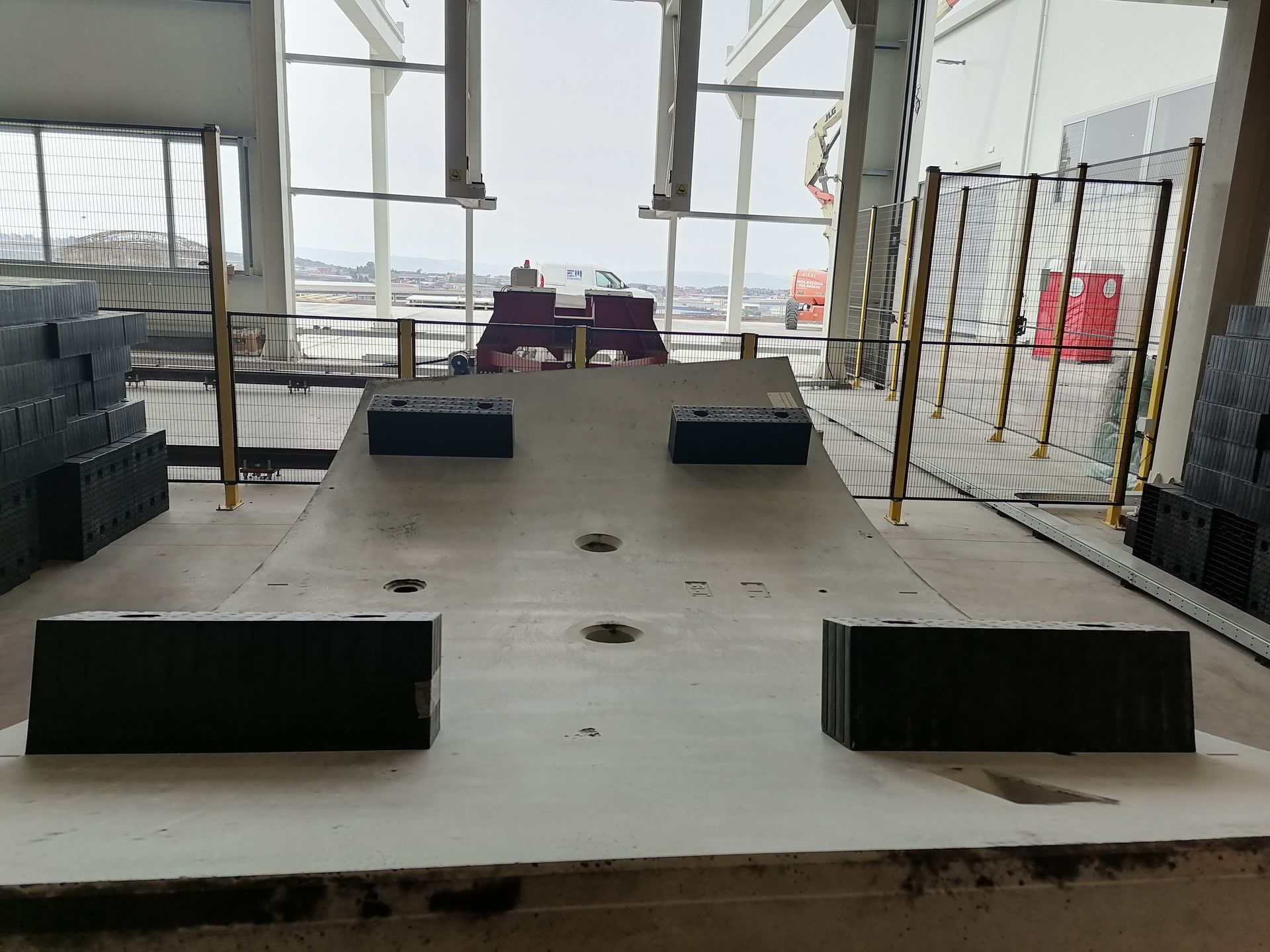
Two locating pins on the underside of each Green Spacer engage matching sockets cast into the tunnel segment. They help operators place the spacer consistently at the designed bearing point and help restrain lateral sliding during approved segment handling and repositioning.
How it works
01 Form the sockets during casting
Matched mould inserts create two recesses in the concrete. The inserts stay in the mould for subsequent cycles; no drilling is needed after curing.
02 Position the spacer
Align the two locating pins with the clean sockets and lower the spacer until both pins are fully engaged.
03 Check the bearing
Confirm that the spacer body rests fully on the concrete and follows the approved bearing layout before loading or moving the segment.
The pins locate the spacer; the spacer body carries the vertical load. The pin arrangement and any segment movements must be assessed for the project-specific handling procedure.
Discuss your project's positioning requirements →
Timber spacer alternatives: frequently asked questions
What replaces timber spacers in tunnel segment storage?
Recycled plastic spacers provide an alternative to the timber blocks and wooden dunnage traditionally placed between layers of precast concrete tunnel segments. Green Spacers support the segments at the planned bearing points, while locating pins help operators repeat the specified positioning. They are intended for a project-specific stacking and handling arrangement.
Where are Green Spacers used?
Green Spacers are used in precast segment factory storage yards and TBM site storage areas. Their role is to separate and support successive layers of concrete segments before installation in the tunnel. References include railway and tunnelling projects in Italy and Australia, including Western Harbour Tunnel and Torrens to Darlington (T2D).
How do I choose plastic dunnage for concrete segments?
The spacer must match the segment geometry, available bearing area, approved stacking layout and loads. The Working Load Limit (WLL) is the recommended maximum working load per spacer under the specified conditions. Selection must also consider load distribution, operating temperature and the approved handling procedure; a nominal load rating alone does not define a suitable stack.
Can recycled plastic spacers be reused?
Reuse forms part of the Green Spacers concept. Each spacer must be inspected before reuse and remain suitable for the approved application. Check its body, bearing surfaces and locating pins, and follow the project inspection and replacement criteria. The reuse decision depends on the spacer's condition and service history.
Does operating temperature affect spacer selection?
Temperature is one of the conditions to assess when specifying recycled plastic spacers. The applicable working load and service conditions must be confirmed for the project, including outdoor exposure and the temperatures expected in storage. Contact Green Impact to discuss the relevant test data and the appropriate product for your application.
What information is needed for a project-specific proposal?
Send the segment dimensions and weight, proposed number of layers, bearing-point layout, expected operating temperatures and handling sequence. Identify whether the bottom segment rests on concrete support blocks and describe any planned movement of segments with spacers attached. This information helps define the appropriate spacer dimensions, pin arrangement and assessment requirements.
Moving beyond traditional timber spacers
Timber blocks and wooden dunnage separate layers of precast tunnel segments. Green Spacers offer an alternative based on recycled plastic, defined geometry and locating pins.
Lighter spacers. Less strain on operators.
At approximately 4 kg, Green Spacers are easier to lift, carry and position than a 20 kg timber support. Less weight to lift helps reduce physical strain on operators’ backs during repeated placement.
Less weight at every placement.
Heavier to lift and reposition.
About 80% less weight to lift in this comparison.
A 20 kg timber support may require two operators, depending on the task and site procedures. Green Spacers reduce the weight handled; lifting methods and crew requirements follow the site’s manual-handling assessment.
Illustrative comparison: approx. 4 kg versus a 20 kg timber support. Actual timber weight varies with dimensions, wood and moisture.
| What matters | Traditional timber supports | Green Spacers |
|---|---|---|
| Weight to lift | Approx. 20 kg in this timber example. Actual weight varies with size, wood and moisture. | Approx. 4 kg per spacer: about 80% less weight in this comparison. |
| Manual handling | A 20 kg support may require two-person handling, depending on the task and site procedures. | Less weight to lift, carry and position, helping reduce physical strain during repeated handling. |
| Material | Timber properties depend on the selected wood and its condition. | 100% recycled plastic. |
| Positioning | Supports positioned according to the specified bearing layout. | Locating pins engage matching sockets to help repeat the planned position. |
| Environmental approach | Sourcing, service life and replacement requirements. | Recycled plastic as an alternative to new wooden supports. |
Which solution fits your project?
Consider the complete application: bearing geometry, load distribution, temperature, handling, inspection and expected service life.
Explore alternatives to timber spacers →Supporting a stack of tunnel segments
Seven precast concrete segments, each weighing 8.35 tonnes, stacked with the bottom segment resting directly on concrete cradles.
7 segments in the stack
Including the base segment
At the lowest spacer layer
Which load reaches the spacers?
The lowest spacer layer supports the six segments above it: 50.10 t distributed over four spacers.
6 × 8.35 t ÷ 4
= 12.53 t per spacer
Theoretical static average, assuming equal load sharing.
Compare the load with the WLL
Example spacer: 170 × 150 × 500 mm(H × W × L), with a nominal WLL of 30 t per spacer.
12.53 t / 30 t nominal WLL
Approximately 41.8% of nominal WLL.
From a calculation to the right application
This provides a useful initial capacity comparison. Final suitability also depends on actual load sharing, bearing contact, operating temperature, loading duration and handling conditions. The WLL applies under the model’s specified conditions.
Discuss your storage arrangement →Practical guides for your next project
Compare materials, understand working loads and explore the positioning system.
Replacing timber
What to assess when moving from wooden supports to recycled plastic spacers.
Selecting dunnage
Dimensions, WLL per spacer, temperature and requirements for reuse.
Positioning pins
How locating pins and cast sockets help repeat the planned bearing position.
Do Green Spacers have better performance?
- Better load transmission: locating pins help place each spacer at the designed bearing points and maintain the planned bearing alignment. See how positioning pins work.
- Resistance to outdoor conditions: plastic is less affected by outdoor weathering than wood.
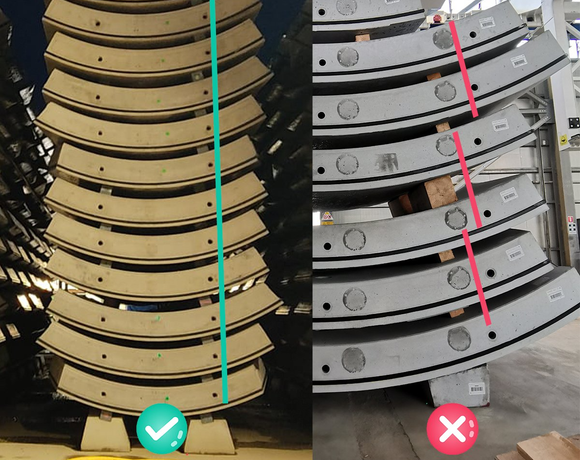
Why are Green Spacers Safer?
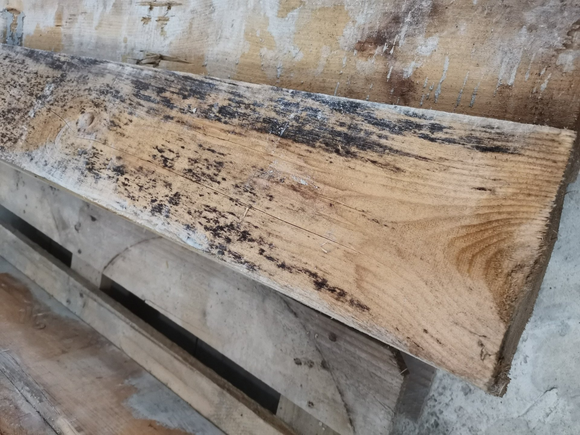
- Resistant to attack by mold and fungi: avoid the risks of an unhealthy environment for workers
- Reduced injury risk for workers: with its low weight, it significantly reduces exposure of workers to the risk of injury
- Compliance with Robotic Handling:
full management by robot avoids the necessity of workers' presence in storage yards
Our contact
© Green Impact Srl Società Benefit
Via Como 3/5 - Nova Milanese (MB), Italy
PHONE +39 0362827569
Contact us!
Send us your details and we will contact you back to arrange an appointment.
Portfolio
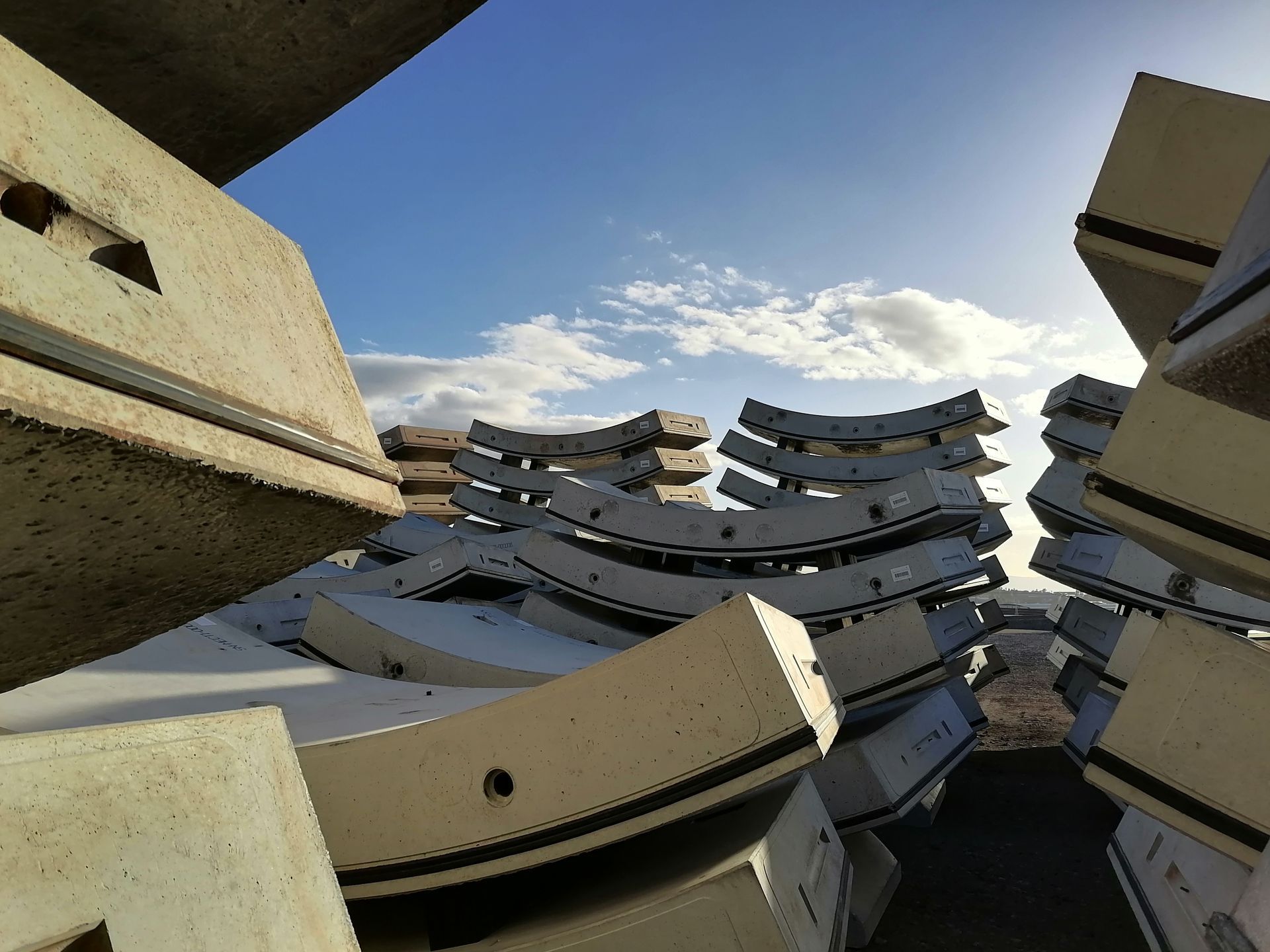
Images from construction sites
A Maccaferri Company

Click & Download our certifications
Quickly access our official, ISO-compliant certifications and our Integrated Policy.